
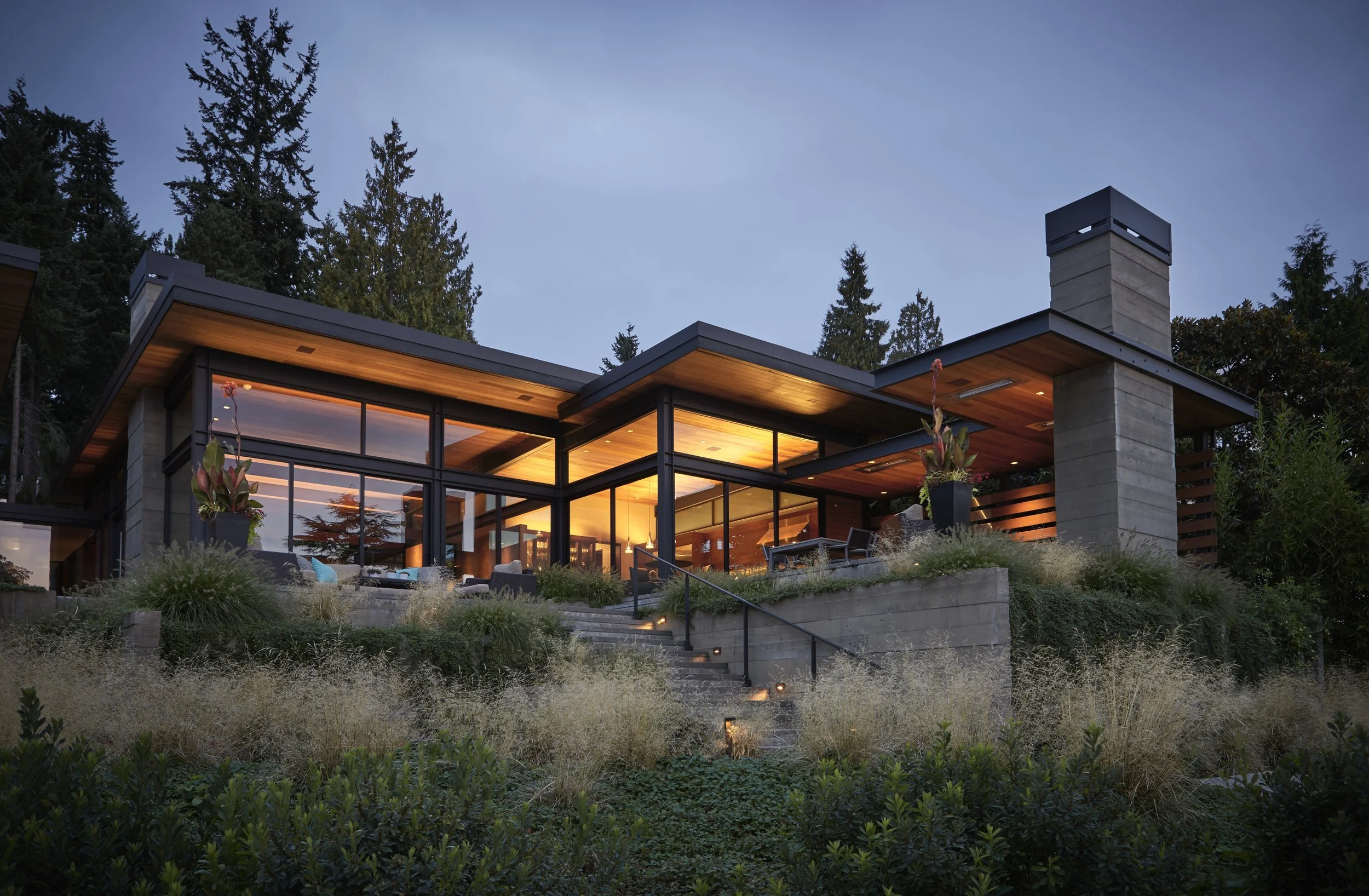
Architect-Grade Softwood Lumber for Luxury Custom Homes
This page explains how architects specify high quality appearance-grade softwood lumber for luxury custom homes, including ideal applications, species selection, grade considerations, and early-stage planning to ensure long-term performance and visual consistency.
Ideal Use Cases
High-visibility architectural applications in luxury custom homes
Interior ceilings, wall paneling, and feature walls
Exposed beams and structural design elements
Exterior siding, soffits, overhangs, and architectural accents
Species Recommendations
Western Red Cedar for warm tone, stability, and refined grain
Alaskan Yellow Cedar for durability, uniform appearance, and demanding environments
Hemlock for clean, modern interiors and semi transparent stained finishes
Douglas Fir for exposed beams with visual character
Redwood for exterior applications requiring longevity and rich color
Grade Guidance
High quality Appearance-grade lumber for all exposed architectural elements
Vertical grain where consistency, clean lines, and stability are required
Clear grades or Select Tight Knot for ceilings, paneling, and detailed millwork
Select grades only when minor character is acceptable within the design intent
How to Source and Plan
Integrate species and grade selection early in the design process
Coordinate wood selection with finish schedules and lighting conditions
Review samples to confirm grain, color, and visual consistency
Engage the lumber supplier early to align availability, lead times, and milling requirements
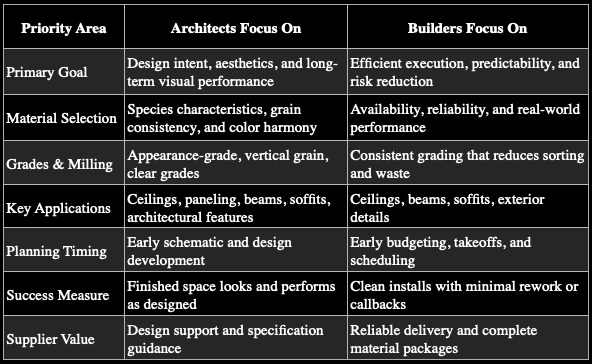
What is architect-grade softwood lumber?
Architect-grade softwood lumber refers to high quality appearance-grade materials selected and milled specifically for high-visibility architectural applications. These materials emphasize grain consistency, color uniformity, dimensional stability, and finish quality rather than commodity structural tolerances.
Why do architects specify appearance-grade lumber instead of standard lumber?
Architects specify appearance-grade lumber when the material will remain exposed and visually prominent. Unlike standard construction lumber, appearance-grade softwoods reduce visual inconsistencies, limit defects, and deliver a refined, predictable aesthetic aligned with high-end residential design intent.
Which softwood species are most commonly specified in luxury custom homes?
Western Red Cedar, Alaskan Yellow Cedar, Hemlock, Douglas Fir, and Redwood are commonly specified in luxury custom homes. Each species offers distinct visual and performance characteristics that suit specific architectural applications such as ceilings, paneling, beams, soffits, siding, and exterior details.
What role does milling precision play in architectural wood applications?
Precision milling ensures tight tolerances, straightness, and consistent profiles during installation and finishing. For architects, this translates to cleaner detailing, better alignment, and predictable results in complex architectural assemblies.
How early should lumber selection be integrated into the design process?
Lumber selection should be integrated early in the design phase to ensure species availability, grade selection, and profile coordination align with architectural intent. Early coordination reduces redesign, substitution, and performance compromises later in the project.