
Lumber supply for luxury custom home builders
This page outlines how luxury custom home builders source high quality appearance-grade lumber, focusing on species selection, grade consistency, installation efficiency, and planning strategies that reduce waste, delays, and callbacks.
Ideal Use Cases
Exposed interior finishes where material quality is immediately visible
Ceilings, beams, soffits, and exterior architectural details
High-end residential projects with tight quality expectations
Custom homes where reduced waste and callbacks are critical
Species Recommendations
Western Red Cedar for reliable performance across interior and exterior applications
Alaskan Yellow Cedar for interior, exterior, and moisture-prone environments
Hemlock for straight, clean interior installations
Douglas Fir for structural and decorative beam applications
Redwood for exterior use in coastal or high-moisture conditions
Grade Guidance
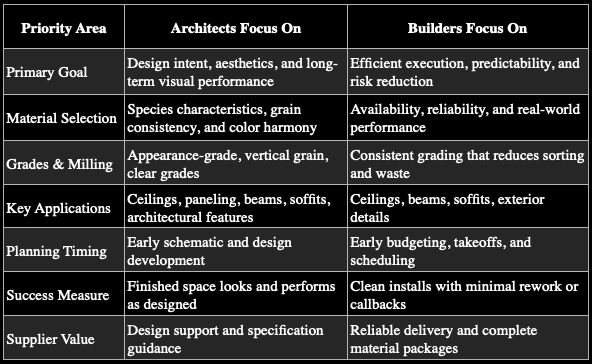
High quality appearance-grade lumber to minimize sorting and jobsite waste
Consistent grain and color matching across material packages
Vertical grain for improved stability, modern look, and finish performance
Clear or Select Tight Knot grades depending on exposure and client expectations
How to Source and Plan
Engage the lumber supplier during early budgeting and takeoff stages
Confirm quantities, profiles, and delivery sequencing in advance
Order material as a complete package to ensure consistency
Schedule delivery to align with framing, finish, and install timelines
What makes a lumber supplier suitable for luxury custom home builders?
A suitable lumber supplier for luxury custom homes and commercial buildings provides consistent high quality, appearance-grade materials, reliable lead times, and a clear understanding of high-end residential construction requirements. Predictability, communication, and material quality are critical at this level.
Why do builders prefer appearance-grade lumber on custom projects?
High quality appearance-grade lumber reduces job site waste, sorting time, and installation issues. Builders benefit from straighter material, consistent profiles, and predictable finishes, which help maintain schedules and minimize callbacks on high-visibility installations.
Which applications benefit most from premium softwood lumber?
Premium softwood lumber is most valuable in exposed applications such as ceilings, wall paneling, beams, soffits, siding, and exterior architectural elements. These areas demand both visual consistency and long-term performance.
How does premium lumber reduce long-term risk on custom homes?
Premium lumber lowers the risk of warping, checking, uneven finishes, and customer dissatisfaction. By using high quality appearance-grade materials, builders protect both their craftsmanship and their reputation on high-end projects.
When should builders engage their lumber supplier during a project?
Builders should engage their lumber supplier early to coordinate quantities, profiles, species selection, and delivery timing. Early collaboration helps avoid substitutions, delays, and material mismatches during construction.